
Reactivation of the Immune System Using Oncothermia as Renewed Hope in Integrative Cancer Care
What if water was the most essential component of our healthy cellular works? What if water built and maintained the structures necessary for life's energy generation in mitochondria? …and what if water in ordered, almost liquid crystalline structures was necessary to properly perform in our bodies? These questions lead to a universal discovery: water in healthy cells is arranged into ordered and communication-prone liquid crystalline lattices. This ordered semi-crystalline structure guides efficient electron transport arising from aerobic metabolism (glycolysis). Primary metabolism in cancer cells is ruled by fast, inefficient anaerobic fermentation not the highly efficient oxygen-dependent glycolysis of healthy cells. Ordered, communicative water structure is inherently missing from the chaotic, individualist tissue built up by cancer cells.
Water as a Radio Antenna
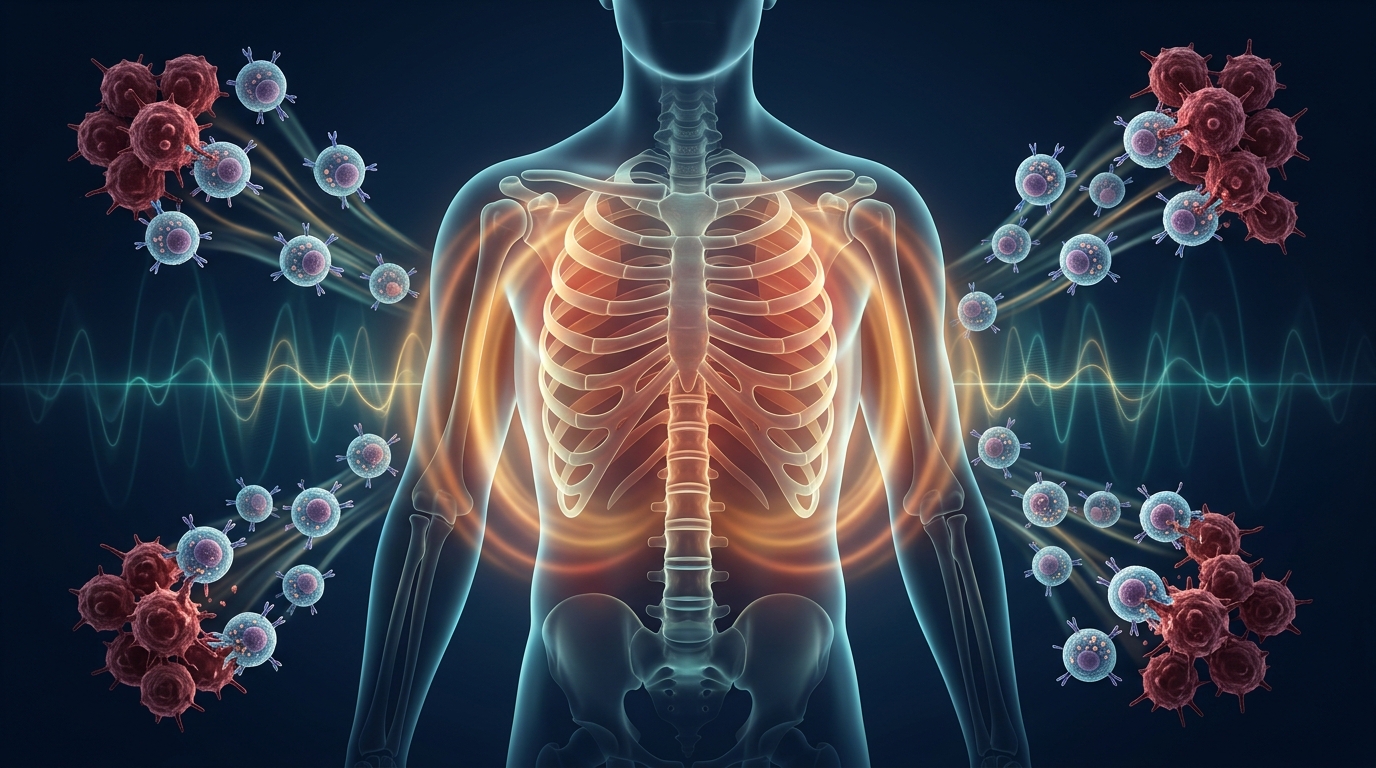
As each single water molecule is essentially a loose radio antenna, outside electromagnetic or electric fields can affect its movement. If these tiny antennas are arranged and bonding to each other they will be much more resilient to an external electromagnetic force moving them. In cancer cells though, where water is less ordered, water molecules are individually on the loose. Hence, they can more easily be moved by the same electric fields. Movement in turn leads to generation of heat. Thus, cancer tissues are self-focusing the external electric fields which create a mildly elevated temperature and rupture the cancer cell membranes.
The Origins of Oncothermia
In the 1980's, a professor of solid state physics, Dr. András Szász in Hungary was intrigued by the self-focusing heat generation of electric fields in disordered cancer tissue. He created the predecessor of what has become now the Oncotherm company and the EHY-2030 medical cancer treatment device. Oncothermia, or modulated electro-hyperthermia since then has grown significantly, to offer a fully European Union Medical Device Regulations (MDR) registered, cancer therapeutic medical device, the EHY-2030. More than six hundred systems in more than forty-five countries around the world. Oncotherm EHY-2030 is a loco-regional treatment system, where a circa 40 cm wide strip of the body or the head can be treated in a patient laying comfortably to the EHY-2030 bed.
Clinical Evidence and Quality of Life
Oncothermia, as the results of the twenty medical university collaborations and clinical trials show, is applicable in all therapeutic systems as an adjunct boost to standard oncological treatments. However, in patients of very advanced disease, the use of Oncotherm systems alone has also yielded significant increases in their quality of life and not once, survival time was observed to increase. In some retrospective analyses, Oncothermia was shown to probably increase theoretically achieved median overall survival with a factor of almost 4x. Notable quality of life increases were achieved in glioma brain tumours, pancreatic and breast cancer patients, but patients struggling against all types of cancer can benefit the increase in life quality due to Oncothermia.
Immune Reactivation: A Renewed Hope
As cancer cell membranes are disrupted, new targets become available for the immune system – this leads to a strong synergy with immunotherapies. The reactivation of the immune system against these new targets achieves effects on non local, metastatic tumors, far from the treated regions. This increased response to distant tumours by the immune system is a renewed hope for all patients irrespective of their grade or disease stage. However, the integrated health management nourishing this very immune system is the undeniable foundation of any successful fight with the disease.
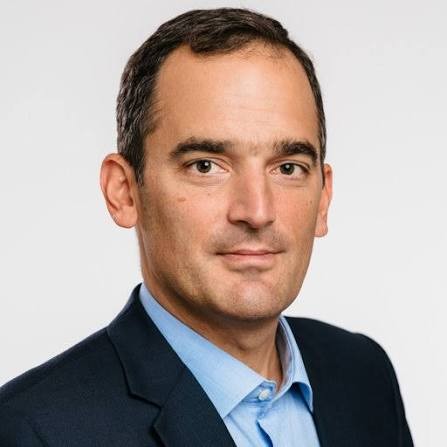
Dr. Domokos Mathe
PhDHead of the In Vivo Imaging Advanced Core Facility at the Hungarian Centre of Excellence for Molecular Medicine (HCEMM)
Dr. Domokos Mathe is a renowned medical researcher and Head of the In Vivo Imaging Advanced Core Facility at the Hungarian Centre of Excellence for Molecular Medicine (HCEMM), specializing in advanced molecular imaging, radiobiology, and modulated electro-hyperthermia (Oncothermia).